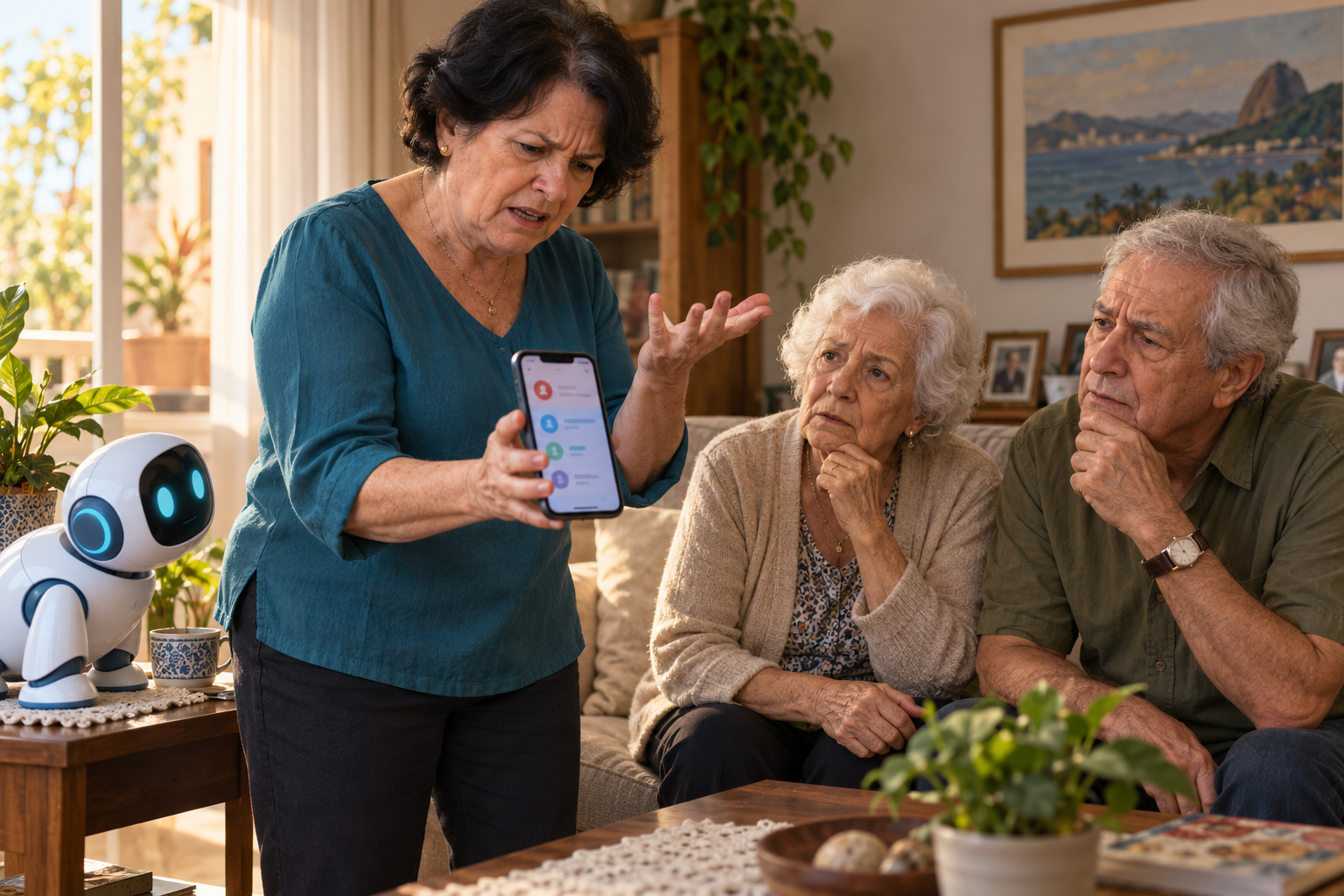
She comes into the room with the phone in her hand. She has already tapped the screen, gone back, tried again. She shows the device to the family:
— I just want to know why this isn't working.
The SIM card is new. There's a wait she didn't understand. For someone who knows the way, it seems like a small thing. For someone in front of a screen with no explanation, each attempt increases the doubt: is it that she needs to wait, or that she needs to do something?
How many worlds fit into a life?
Someone who used a wood-burning stove may have seen radio, television, computers, and cell phones become part of life before hearing that it is now possible to talk with artificial intelligence. Each new arrival brought another way of doing things. It did not always bring someone to explain.
Explore the decades below. These are milestones, not the same experience for every family: income, location, and opportunities shaped when each technology entered a household.
1950 · The radio and the novelty of TV
The radio was part of everyday communication; in 1950, regular television broadcasts began in Brazil. Having a TV at home was another story.
1960 · The image begins to circulate
Videotape helped distribute programs and form networks of broadcasters. Television was reaching more places, without transforming all homes at the same time.
1970 · The screen gains color
Color television arrived in Brazil in 1972. Abroad, personal computers such as the Apple II and the TRS-80 arrived in 1977; they were still far from everyday life for many families.
1980 · A computer for home and work
The IBM PC arrived in 1981. In Brazil, international academic connections began in 1988. Computers and networks were still not the everyday experience of the entire population.
1990 · Connections reach more people
Cellular telephony began in Brazil in 1990; commercial internet, in 1995. The arrival of these services did not mean immediate access for everyone.
2000 · More things fit in the phone
Digital cell phones, messaging, and mobile internet expanded the possibilities. In 2007, the iPhone brought together phone, browsing, and a touch interface — a milestone, not the beginning of all smartphones.
2010 · The internet goes with you
In 2015, the cell phone overtook the computer as the device used to access the internet in Brazil, according to TIC Domicílios. Learning to use the network also involved learning to use a small screen.
2020 · The screen responds, too
In this decade, conversational assistants began to offer interactions by text, voice, and image. In Gemini Live, for example, it is possible to have a conversation about the camera or the shared screen, depending on requirements and availability.
Arthur C. Clarke wrote that any sufficiently advanced technology is indistinguishable from magic. The comparison helps us understand the sense of unfamiliarity. A machine that converses can seem fascinating, but also hard to approach. The quote appears on the Arthur C. Clarke Foundation website.
Sources and further reading
Help also needs an entry point
There are already assistants capable of conversing by voice and receiving the image from the camera or the screen, such as Gemini Live. The documentation explains the features and requirements on Android.
Sources and further reading
But the person needs to be able to reach that help. If she doesn't know how to use the app or doesn't feel at ease talking to an AI, the model's capability is still far from the problem in the room.
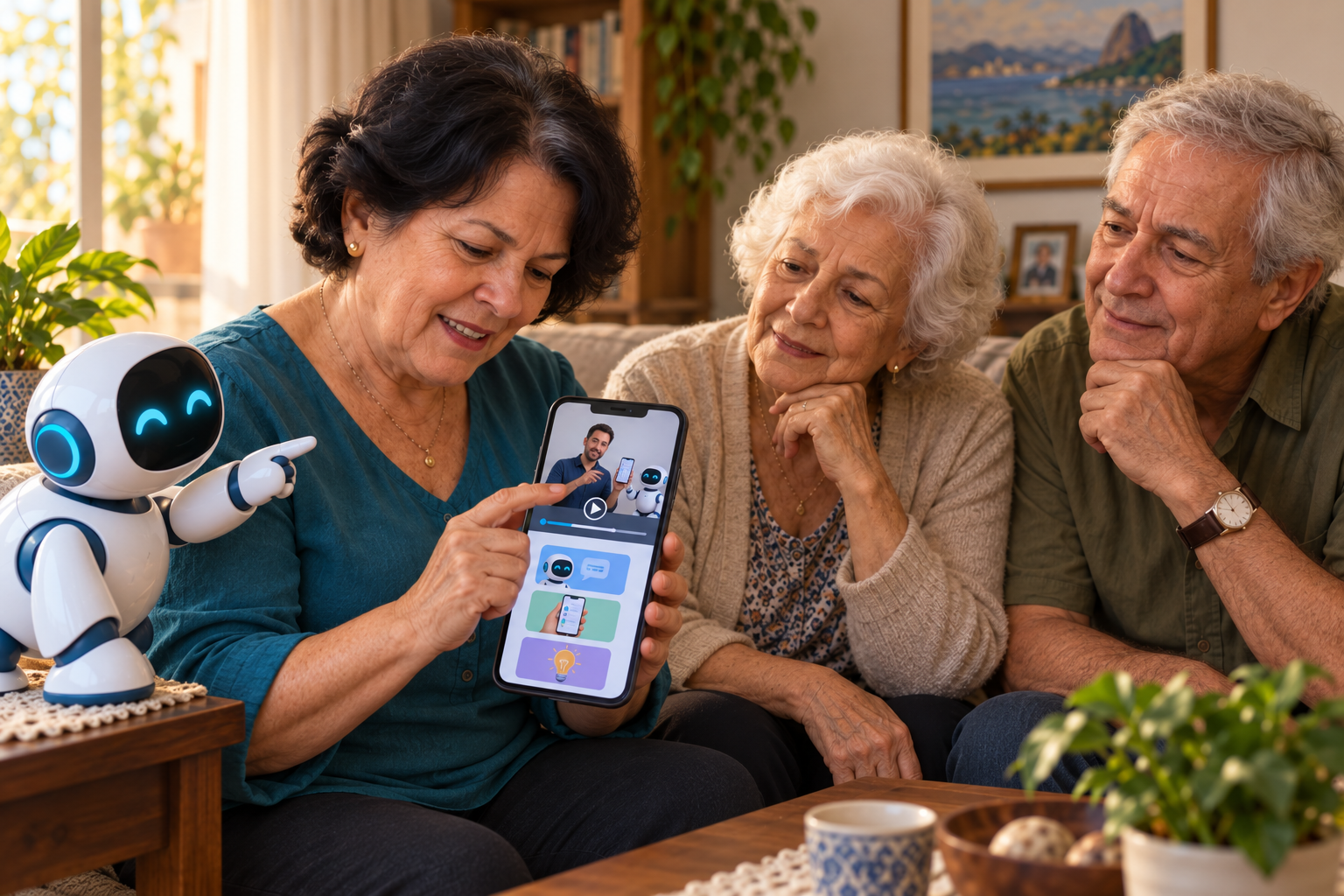
Do we need to teach people how to use artificial intelligence with the same patience we showed when teaching them to use a cell phone for the first time?
Short videos, explanations that can be repeated, and familiar interfaces are paths we want to explore at Kuaapy, together with the people who would use this material. Community support could help make it possible. It is an avenue to explore, not a course that is available yet.
The lady in the room doesn't need to learn all the names of the technology. She needs to understand what happened and be able to take the next step with autonomy.
Have you or someone in your family ever gotten stuck on a screen without knowing what to do? Tell us privately what was missing in that moment — and what kind of explanation would have helped.
Related topics: voice help, customization, and listening to people.