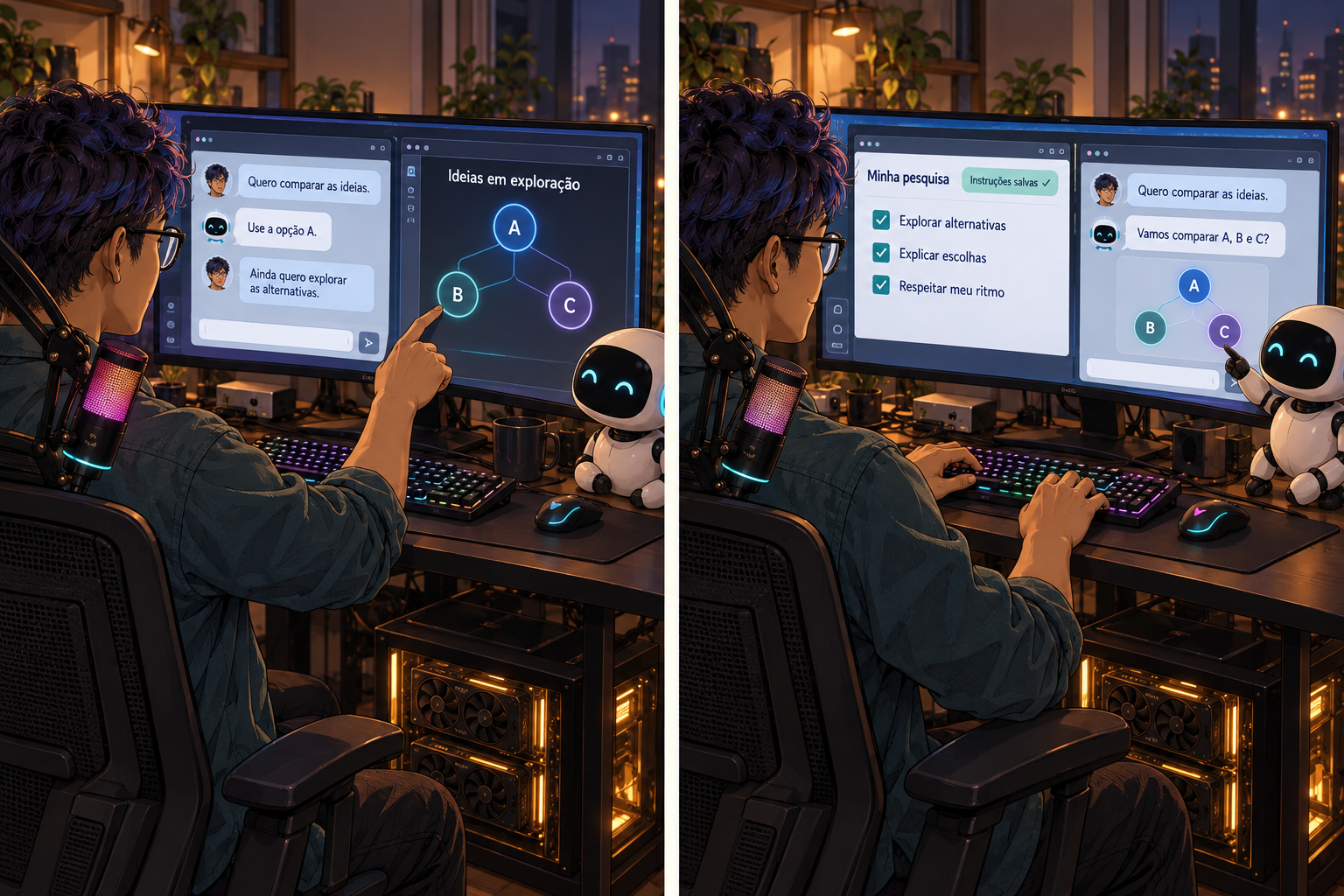
The researcher opens his ideas on the monitor. There are three paths to investigate, a half-finished comparison and a question still unanswered.
In the window beside it, he asks the AI for help: “I want to compare the ideas.”
“Use option A.”
He returns to the keyboard. “I still want to explore the alternatives.”
Option A might make sense. But he still wanted to understand B and C. The tool reached a decision before following the work.
Their working agreement could be saved too
In the next conversation, he knows what he will need to explain: he wants to research before concluding. He wants to understand the reasons behind choices. He wants to follow a question without being told the discussion is over.
Then he finds an instructions field.
He writes his preferences, saves them and opens the research again. The same ideas are still on the screen. Now, when he asks for a comparison, the tool proposes examining all three paths.
He can disagree, change an instruction or ask for a more direct answer. The settings belong to him.
The difference shows in what he no longer has to repeat. The first request in the conversation is about the project again.
The form of help is part of accessibility
An answer can be available and still take effort to use.
For one person, an enormous block of text makes it hard to follow. For another, an answer that is too short hides the reasoning they need. Some prefer steps; others want to see the whole picture before starting.
An autistic person can use these instructions to adapt collaboration to their own pace and the way they organize their thinking. They choose what helps. The tool does not need to infer their preferences from a diagnosis.
Needs can also change with the task. In research, explore. In execution, follow steps. In review, find what is missing.
Being able to adjust this is one way to make the tool usable in real work.
We saw this adjustment happen
While preparing this post, we followed the creation of a Gem called “Pesquisadora” (“Researcher”) in Gemini. Its instructions asked for analysis of alternatives, explanations of choices and room to keep investigating.
The project's context was brought into the conversation, and the tool responded by connecting the materials to the research. The request about how to collaborate became a setting that could be consulted and edited.
This example shows the value of preserving the working agreement. The user can shape the help they seek instead of depending only on each answer's default format.
Saved instructions do not guarantee everything will work as expected. They provide a place to adjust, experiment and return. The project materials also need to keep up with changes.
The researcher returns to the monitor. B and C are still there. The conversation finally has room for them.
Tell us about your experience
What do you need to repeat for an AI to work your way? Use the site's private form to tell us what helped, what you still need to adapt or which setting you wish you had. Your account does not automatically become a public comment or a testimonial with your name.