You speak to the app. It turns your question into text and delivers an answer on the screen.
The microphone is right there, next to the message field. To hear what came back, the path may be a different one: a small speaker below the answer, or an option inside a menu.
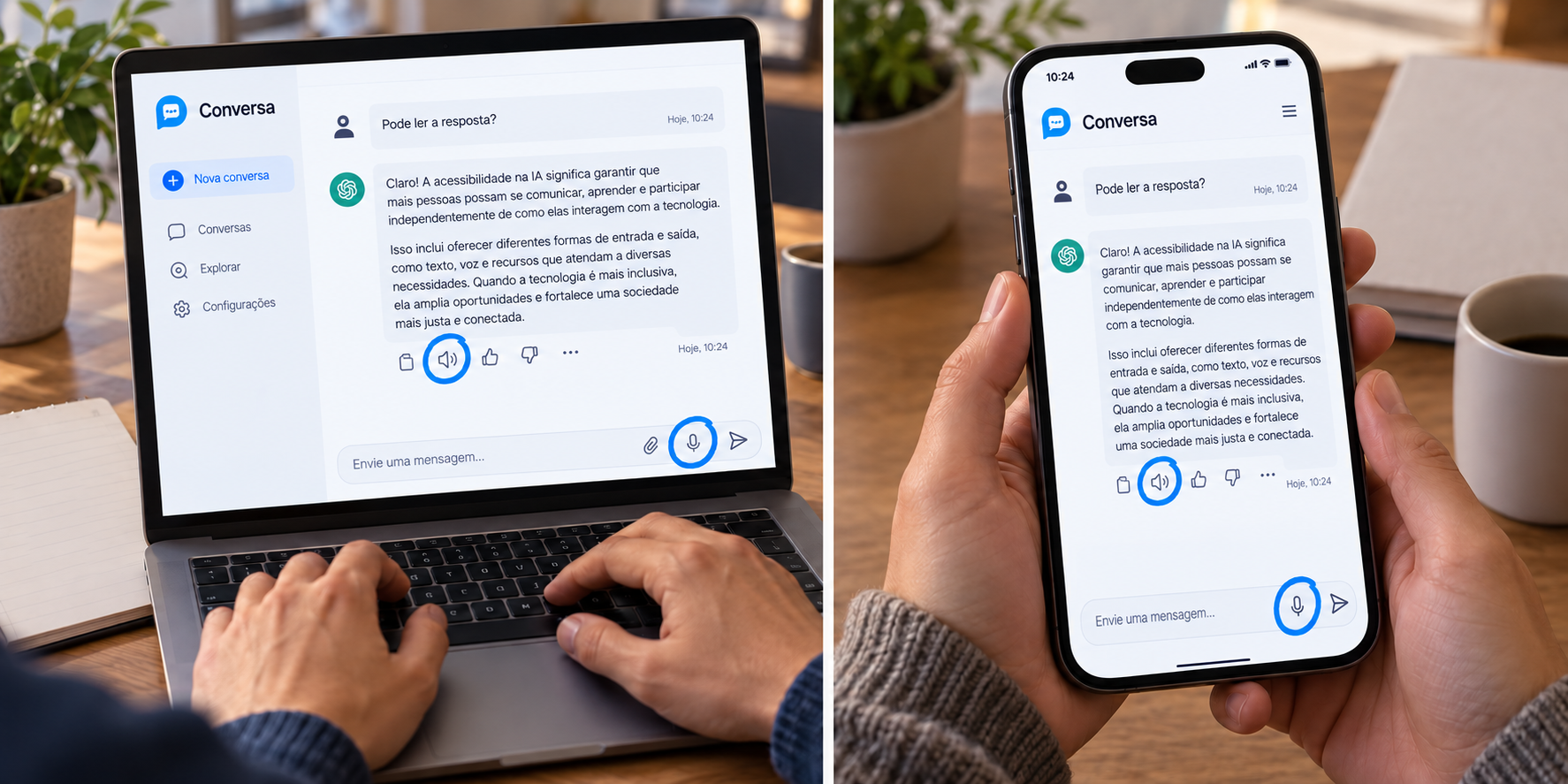
Speaking and listening are part of the same conversation. The circles highlight where to find each feature on the computer and on the phone.
They are two small controls. For someone who needs voice to carry out the task, they make a big difference.
The request may be a route, a text revision, or a technical explanation. The need to listen does not indicate the age, the profession, or the competence of the person using it. It indicates a condition of use that the product needs to consider.
Available, findable, and usable
In the interfaces that inspired this image, the listen feature exists. In some, it appears next to the answer; in others, it sits inside a menu. The illustration uses a fictional app to highlight those positions.
Having the feature is part of the work. The person also needs to be able to find it, activate it, and follow the result. A button can be small without being a puzzle: an accessible name, clear identification, and a consistent path help turn a technical possibility into a usable tool.
When the answer arrives in a format the person cannot use, a correct answer can still leave the task half done. Voice input and audio output deserve to be thought about together.
A path for those who need it
Every AI service should offer a path for people who need to speak the question and hear the answer. That is the discussion: treating these forms of interaction as part of the project from the start.
Generating speech and maintaining the infrastructure have costs. That does not end the discussion about access. Even when there is a charge, there should be a way for the person to use the feature they need.
We are not arguing that every operation should be free. We are arguing that accessibility be considered in any AI service: that a person be able to know how to speak, how to listen, and which conditions apply before relying on the tool for a task.
The microphone and the speaker can take up only a few pixels. The decision to offer both opens possibilities for very different people.
When were you able to speak to a tool but had trouble hearing its answer? Tell Kuaapy about that part of your experience, including a way you found that worked.