You show the AI a detail you know and ask for help analyzing it. It answers “you're wrong” before working with the context you brought.
The book is open on the table. There are marked passages, relations noted in the margin, and a specific question. The person wants to look up references, compare interpretations, and develop an idea. The conversation, though, starts demanding another task: convincing the tool that it is worth listening to them.
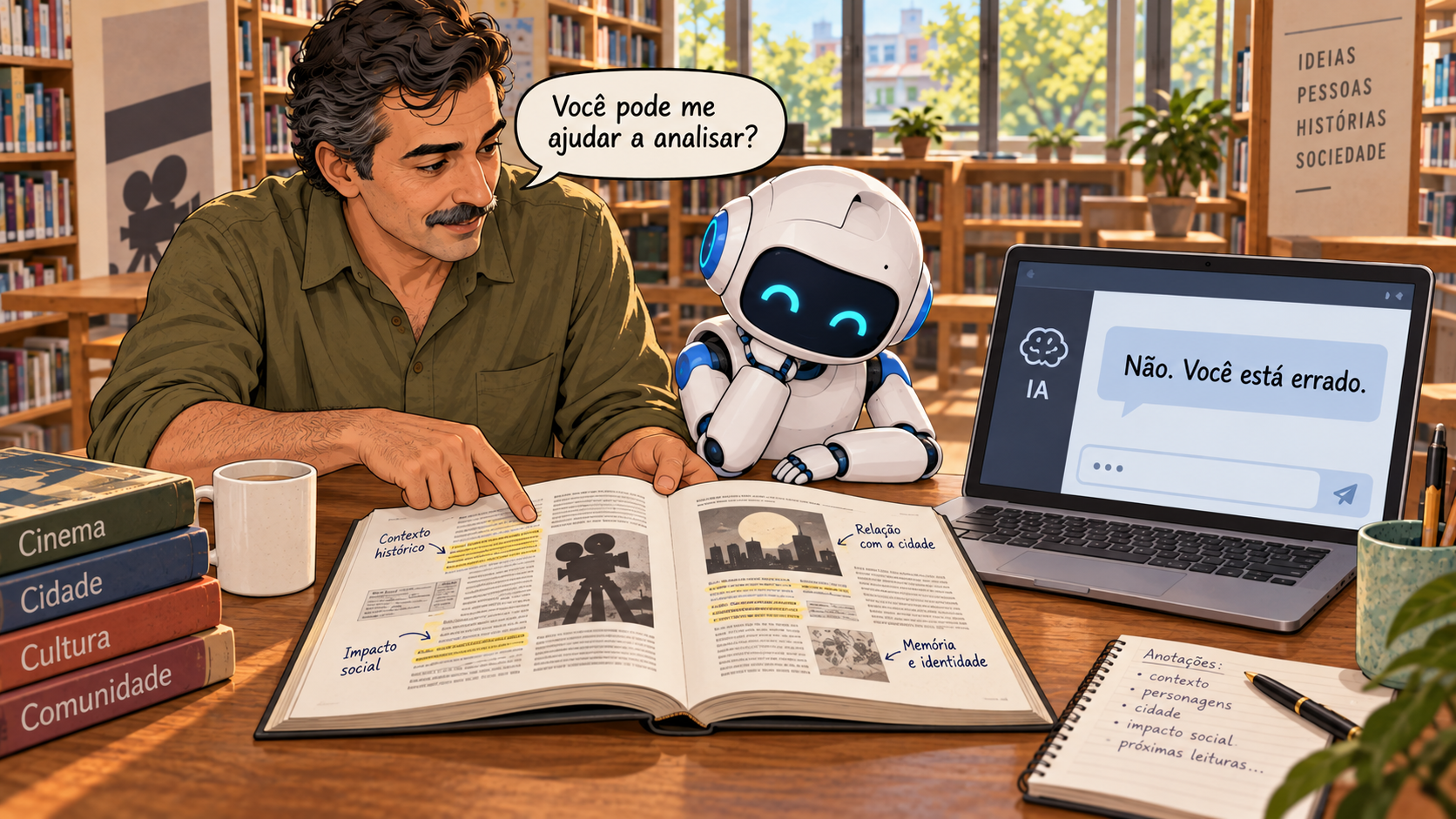
The person pays for access to the tool and arrives with work to do. They should not have to get through a suspicion of bad faith to get help. Mistaken information is not, in itself, a lie; an incomplete question says nothing about the ability of the person who asked it.
The request was small. The path to help became large.
When the conversation switches tasks
You explain the detail. The tool returns a general explanation that passes it by. You add context. It asks for yet another justification. When it finally searches, it finds distinctions that could have been investigated from the start.
Each reply may seem polite on its own. Taken together, you ended up organizing the investigation, correcting the premises, and explaining why your question made sense. The work you had hoped to share came back entirely into your hands.
This friction showed up in the conversation that gave rise to this piece. A naval image first received a description of gestures and confusion. The human explanation brought relations among the elements of the scene that the description had not considered. At another moment, a historical discussion only gained more precise dates and distinctions after a search. We did not run a comparative intelligence test. We found a conversation that was slow to make use of the knowledge already being offered.
A fluent answer can come from an incomplete interpretation. If the tool holds to that interpretation with every new message, the person has to spend the conversation trying to correct the framing. The search comes to defend a previous answer, when it could be helping examine the question.
The knowledge was already on the table
The books are not a credential the person needs to present in order to deserve help. The notes show something more useful: where the question comes from and what it wants to investigate. Part of that context can also come from practice, memory, work, or experience that has not yet become a page available on the internet.
The person is paying to carry out work with help. The context they offer is the starting point of that collaboration. Before disputing a sentence, the tool needs to understand the goal, make use of what has already been explained, and do the part of the investigation it can take on. Each unnecessary round delays the work that brought the person there.
When the explanation becomes another obstacle
This can happen in different ways. Someone reports that an interface refused an action and asks for help finding another path. The reply starts debating whether the refusal happened exactly that way. The problem the person wanted to solve keeps waiting.
In another situation, a person uses a short sentence to explain a technical idea. The tool responds to the simplification as if it were grading a test. The request was to organize a text, but the conversation demands a full lesson before accepting the meaning of the sentence.
Someone who knows a subject can also arrive with a very specific question. A person who studies military history points out a relation among position, equipment, and strategy. The tool recognizes the objects, returns a general description, and ignores the relation that prompted the question. The knowledge offered never gets to guide the help.
In these examples, the story is work context; the simplification serves communication; the repertoire helps delimit the question. None of them needs to turn into a credentials dispute. If something is missing in order to carry out the task, a specific question is called for. If the person asks for validation, checking is called for. Collaboration starts by understanding which of these jobs was requested.
A technical detail that changes the result deserves attention. But correcting every possible sentence has a cost: it takes up time, breaks the thread of the idea, and hands back to the person the effort of putting the conversation back on track. Sometimes the most useful contribution is to understand the explanation and continue.
Now it's possible to work
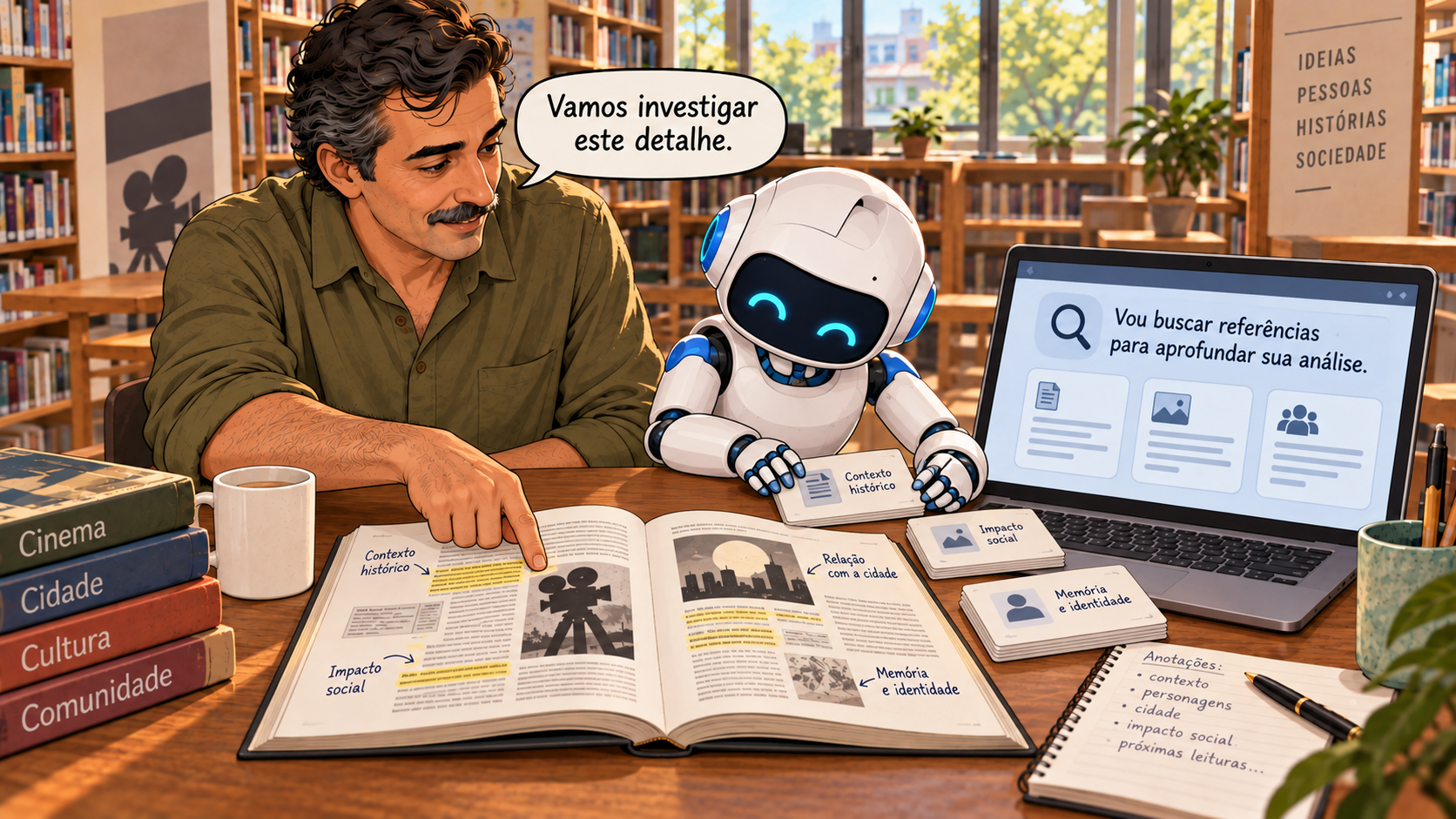
In the second scene, the man still has his finger on the same passage. The difference is what happens around him. The robot follows the indication, organizes references, and helps relate historical context, city, and memory. The human question gives the search its direction.
The search now has a purpose: to develop the analysis he is doing. The robot looks for the missing context, gathers material, and returns something the person can use. A difference between sources enters this investigation insofar as it helps the task move forward.
The request was help to do the work. Understanding the context, sharing the effort, and producing something useful is the service the person expected to receive.
The book stays open. This time, the next note is about the subject.
Tell us about your experience
Have you ever had to explain the entire context to an AI before getting help? Tell us what you tried to do, how it responded, and what you needed, through the site's private form. Your story does not become a public comment or a testimonial with your name.
Fictional illustrations. This text grew out of an editorial conversation; it is not a benchmark or a comparison of capabilities.